

Beginner field manual

Grand Magic: Nightfall beginner tips

For first sessions with Sorcery: Night of Hallucinations

Start with a sensible order: learn the fight, give each sorcerer a clear job, prepare for curses, then progress with intent. This field manual keeps strategic combat, simulated domains, elemental curses, and dungeon-style challenges readable without pretending there is one mandatory build.

Twin Horizon Quest is an independent English-language Canadian review and guidance site. This guide is not affiliated with or endorsed by the game publisher or developer.

A novice sorcerer facing a violet portal in a dark archive hall.
Archive visual: a first step toward a supernatural field report.
Archive orientation · 01

Read the game loop before optimizing it

In the opening stretch, the useful goal is not to solve every system. It is to recognize the planning loop: choose what your sorcerers contribute, test that plan in combat, and let difficult supernatural content tell you what deserves attention next.

Roster record

Sorcerers are the planning layer

Team building starts with contribution, not with treating every new roster option as interchangeable. Ask what a sorcerer helps the group handle, where that help is useful, and which gap remains visible. A small working group gives you a clearer baseline; as new options appear, revisit the plan with a specific question instead of replacing it simply because it is new.
Encounter record

Combat is the test of the plan

Strategic combat becomes easier to read when you notice encounter pressure and act deliberately rather than chasing a vague idea of power. Watch which supernatural threats become urgent, where your approach loses clarity, and whether a revised plan produces a cleaner attempt. A battle that stops working is useful evidence: it points toward a question your team or preparation has not answered yet.

Challenge record

Domains, curses, and dungeons change the question

Simulated domains, elemental curses, and dungeon-style challenges are reasons to prepare before repeating a difficult encounter. Read the situation as context, not as a demand to force one answer everywhere. If a stage resists the plan that worked before, it can be useful feedback about the next adjustment—whether that is team contribution, a clearer observation goal, or a different way of approaching the challenge.

Field sequence · 02

Your first-session priority order

Use this sequence when the game presents more ideas than you can reasonably process at once. It is deliberately modest: each step gives your next attempt a purpose without asking you to optimize a whole roster or decode every supernatural condition immediately.

01Observe

Establish a repeatable team plan

Choose a small working group and spend enough time with it to understand how its members contribute. The early aim is clarity, not premature optimization. After an encounter, note the moment your plan felt thin: perhaps pressure rose too quickly, a threat went unanswered, or the group did not make enough progress. Those observations make later substitutions more meaningful than constant lineup changes.

02Adjust

Treat early combat as information

Routine fights are a low-pressure place to watch what makes an encounter difficult. Pay attention to which threats feel urgent, where your team loses momentum, and whether a deliberate change creates a cleaner result. Repeating content is not wasted if the next attempt answers a question. Keep the lesson simple enough to remember when a more demanding supernatural enemy or dungeon-style challenge arrives.

03Commit

Spend progression attention where it solves a current problem

Link progression choices to an obstacle you can already see: a team that lacks stability, encounter pressure that remains unanswered, elemental curse context you have not considered, or a dungeon-style challenge that exposes a mismatch. This keeps attention from scattering across every available possibility. You do not need a universal path; you need a reason for the next decision and a way to tell whether it improved the current problem.

Team board · 03

Build a team with clear jobs

A coherent first team does not require a ranking chart. Instead, use each lineup choice to answer a planning question. The following labels are editorial prompts, not verified in-game classes: they help you identify what the group needs when an encounter becomes harder to read.

Planning prompt

Choose a pressure-handling role

Identify the squad member or approach that helps answer the encounter’s most immediate threat. This is not a named class or a guaranteed mechanic; it is a way to ask whether the team has a response when pressure mounts. After a difficult supernatural enemy, revisit the question: did the plan have a clear answer to what made that fight feel unmanageable?

Planning prompt

Choose a momentum-making role

Notice who helps the team make progress when an encounter calls for more decisive pressure or a clearer offensive plan. Survival and progress belong together in strategic combat. Rather than assuming a single approach always works, look for the contribution that turns a cautious attempt into one with direction, then see how that contribution fits beside the rest of the group.

Planning prompt

Leave room to adapt

Do not treat the first usable lineup as permanently locked. Elemental curses, simulated domains, and dungeon-style conditions can expose a mismatch that was not obvious in ordinary combat. When that happens, make a deliberate substitution based on the next challenge, not on anxiety. The strongest beginner habit is keeping the team’s jobs understandable while leaving room to reconsider them.

Tactical record · 04

Make combat notes after every hard fight

When a supernatural encounter goes badly, turn the attempt into a brief field report. The goal is not to discover hidden rules; it is to make your next decision more precise than “try again.”

Name the point of failure

Try to identify the moment the encounter stopped feeling manageable. Was pressure mounting faster than the group could answer it? Did an important threat remain unresolved? Did the plan feel ineffective, or did the team appear mismatched to the challenge? Specific notes are more useful than broad frustration because they give the next attempt a defined purpose. You are observing what happened, not claiming certainty about systems the encounter has not clearly explained.

Change one meaningful variable

Adjust one clear part of the plan at a time, whether that is a team contribution, the preparation you bring to the challenge, or the approach you want to test. A controlled change makes the next attempt easier to interpret. If several things shift together, it becomes difficult to know what actually improved the situation. That restraint is especially useful when a difficult battle tempts you to abandon every earlier observation.

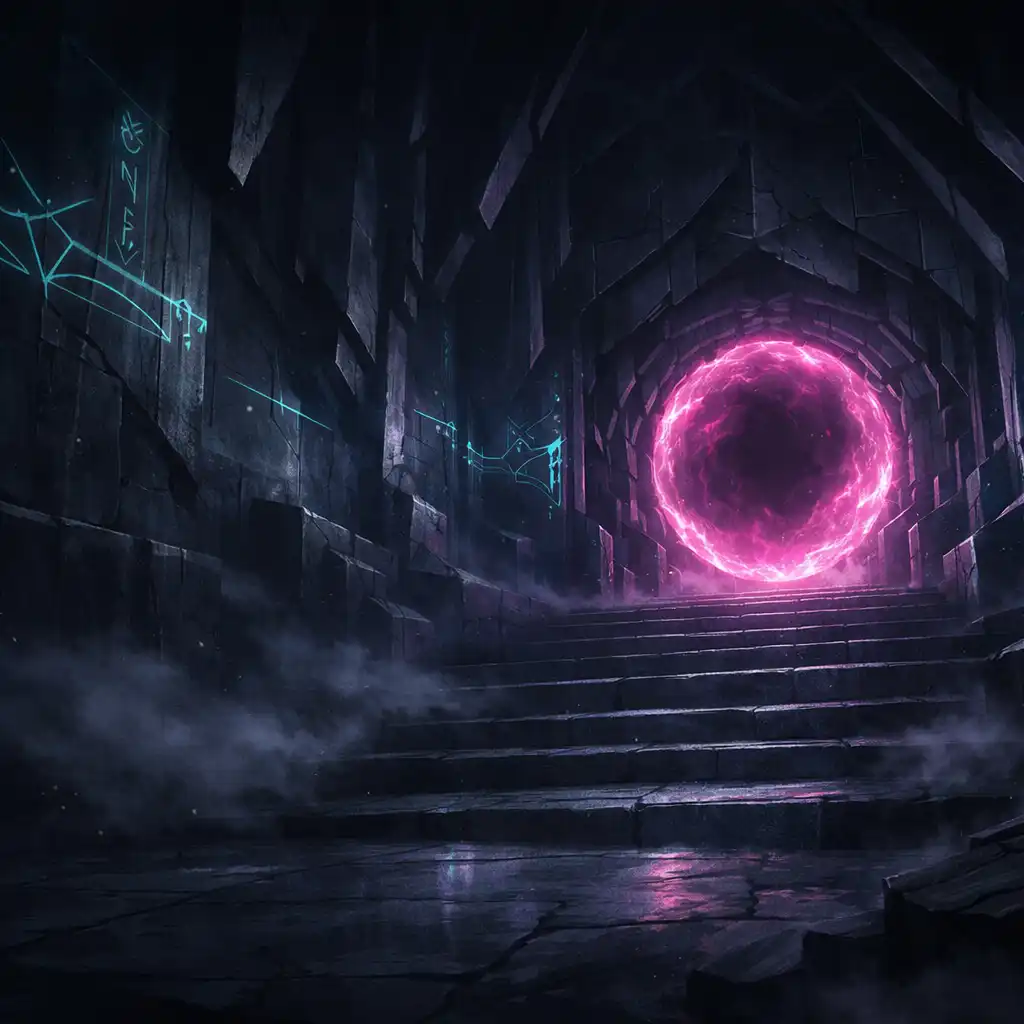
A shadowed corridor leading toward a glowing magenta portal.
Archive visual: a simulated-domain threshold.
Portal protocol · 05

Prepare before entering a simulated domain

Pause before entering a simulated domain or dungeon-style challenge. Read it as a condition, not merely a destination: what makes this attempt different from ordinary combat, and what do you want to learn if the first plan does not hold?

01

Clarify team jobs. Know what each active contribution is meant to address before the challenge begins. A clear plan is easier to assess than a lineup assembled without a question.

02

Consider elemental curse context. Keep the context broad and practical: look for the way a curse may change the pressure you need to prepare for rather than assuming a universal answer.

03

Choose one observation goal. Decide what this attempt should reveal, such as whether the plan handles pressure, makes progress, or needs a more adaptable contribution.

Progression chapter · 06

Progress without scattering your attention

Steady progression starts with a visible reason for the next choice. That approach does not prevent experimentation; it simply keeps new possibilities connected to the encounter, team, or preparation question currently in front of you.

01

Let the next obstacle set the priority

Choose a progression focus based on the problem you can see instead of treating every option as equally urgent. The obstacle might be a team issue, a difficult supernatural enemy, elemental curse concern, or a dungeon-style challenge that asks more of the current plan. This keeps the next decision grounded in evidence and makes it easier to tell whether the attention you invested actually addressed the obstacle.

02

Deepen understanding before widening the plan

Learn how a small active team behaves together before adding complexity just because more choices appear. Team clarity and combat observation make each later experiment easier to evaluate. You can still test alternatives, but do so with a question in mind. A smaller plan you understand is more useful than a wider plan you cannot yet read.

03

Use stalled progress as a diagnosis cue

A plateau can be a reason to revisit encounter notes, team jobs, and preparation rather than repeat an unclear routine. This applies across simulated domains and dungeon-like challenges: pause, describe what remains unresolved, then decide which single change would make the next attempt more informative. The point is not to blame the player for a stall; it is to turn the stall into a useful question.

Continue with the Grand Magic: Nightfall Progression Guide
Archive warning · 07

Mistakes worth avoiding in the first stretch

These notes do not prescribe hidden rules. They flag habits that can make the opening experience harder to interpret, especially when a difficult encounter encourages hurried changes.

Replacing the whole approach at once makes it harder to learn what actually caused trouble. Start with one meaningful adjustment and a fresh observation. If the next attempt changes the team, preparation, and overall approach simultaneously, even a better result may not tell you why it improved. Return to the field-note method and name the pressure you are trying to answer before you revise the plan.

Beginner progress becomes easier to read when every attempt has a purpose.

Next archive path · 08

Choose your next archive path

The next page should answer the question that remains after this field manual. Choose the route that best matches the part of the game you want to examine more closely.

Combat inquiry

Refine the fight plan

Use the Combat Guide when encounter notes leave you wanting a longer discussion of strategic combat and how to approach supernatural enemies with more deliberate questions.

Open Combat Guide
Team inquiry

Revisit team choices

Use the Sorcerers and Team Building Guide when clear jobs are not enough and you want a deeper framework for thinking about how sorcerers can work together.

Open Team Building Guide
Progression inquiry

Plan the longer climb

Use the Progression Guide when early observations are ready to become a more deliberate plan across domains, curse context, and dungeon-style challenges.

Open Progression Guide
Listing threshold

Ready to inspect the official listing?

When the dark-fantasy premise of sorcerers, curses, simulated domains, and dungeon-style challenges sounds like the kind of world you want to explore, view Grand Magic: Nightfall on Google Play. This site does not distribute the game; the button below is the single direct listing destination.

View on Google Play ↗

Twin Horizon Quest is an independent English-language Canadian review and guidance site and is not affiliated with or endorsed by the game publisher or developer. Game names and marks belong to their respective owners.